Monday, October 8, 2012
OliveOilLovers.com - The best selection of olive oils online!
One of the most common things I hear is, "Ok, all this talk about what good quality extra virgin olive oil is, but where do I go to buy it?" Well wonder no more, your answer is finally here! Now everyone, anywhere in the Continental US has access to one of the best selections of extra virgin olive oil from some of the world's top producers, and can have it delivered right to their doorstep over at www.oliveoillovers.com.
This is a wonderful online shop where you can begin exploring a multitude of varieties of olive oils from various oil-producing regions. These are some of the best oils out there, produced by small family estates who put their heart and soul into their quality and production.
So for your next home-gathering, why not throw an olive oil tasting party and have fun comparing the wide range of flavor notes from a full selection of regional oils! I'm about to throw my 2nd annual harvest tasting party coming up again next month and can't wait!
Sunday, August 5, 2012
Quinoa Salad with Honey-Lime Vinaigrette
In the midst of getting knocked-out this summer by heat wave after heat wave, my craving for salads has been endless; however, eating salads night after night can get a little mundane, especially when my go-to dressing is just a basic combination of extra virgin olive oil and balsamic vinegar. Well, it's time to switch it up and start experimenting with salad dressings - one of the most ideal ways of using extra virgin olive oil.
Greens are greens, but they can transform depending on what you put on them. I was inspired after eating lunch a couple months ago at a vegan restaurant in my neighborhood, where salads are their obvious specialty. Now I'm no vegan, but it was their Quinoa salad with an amazingly tasty honey-lime vinaigrette that had me going back. After a few attempts to get the dressing just right, it has now become one of my favorite salads to make at home.
For the Salad:
Cooked Quinoa
Mixed leafy greens
Sweet Corn
Red Pepper
Avocado
As it is a salad, use as little or as much of each ingredient as you like. First, prepare some quinoa according to the package directions and let cool. I like to prepare a batch of it and keep it in the fridge for future salad-making. Go crazy with mixing up the greens. I found a great mix at my local farmer's market with spinach, red leaf, mustard greens, pea shoots, and watercress. With greens, the common rule is that the more bitter-tasting the green, the more nutrients it holds. I also found some fresh New Jersey sweet corn at the market as its just now coming into season, so cut the corn off the fresh cob and add it raw to the bowl of greens (yes, you can eat it raw and it's delicious!). Next, add some cooked quinoa then top-off the salad with some thinly-sliced red pepper and sliced ripe avocado.
For the Vinaigrette:
3 tsp. Dijon Mustard
2 tsp. Honey
1/2 tsp. Fresh Lime Juice
1/3 cup Extra Virgin Olive Oil
I find this recipe to make enough for about 3-4 single-serving meal-sized salads and I used Greek Thyme Honey, the juice of one small key lime, and a wonderfully fruity Nocellara extra virgin olive oil from Sicily. Add all ingredients to a small bowl and whisk until smooth and creamy. Store any leftover dressing in a jar for up to a week.
Labels:
cooking with olive oil,
Quinoa,
salad,
salad dressing,
vegeterian
Friday, August 3, 2012
No really, fat is GOOD for you.
Tom Mueller, author of Extra Virginity: The Sublime and Scandalous World of Olive Oil, tackles the subject in Olive Oil and the F Word where he reminds us that fat "controls and modulates your fertility, your appetite and your mood" as well as your immune system. A healthy intake of natural fat also keeps your skin and hair soft and radiant. I remember my favorite esthetician once telling me how she could tell which clients were on low-fat diets due to their skin appearing more thin, dry and dull. Great skin, a healthy immune system, and a regulated metabolism - isn't this what we all want?
So the challenge today is how to convince the general public that it's OK to eat some fat. Perhaps we need to look to Southern Europe, and Greece especially, where families consume large amounts of olive oil - whole pitchers of the stuff - in a matter of days and yet obesity is rare. And it's not just olive oil. Look at the French, for instance. The entire country lives off of cream, butter, and cheese and we envy their waistlines. It's certainly time to start asking some questions. In the meantime, pour on the olive oil!
Tuesday, April 3, 2012
Light and Simple Veggies
Spring is officially here, and with the warmer weather arrives an abundance of fresh spring vegetables. Those garden vegetables and leafy greens are just begging to be steamed and doused in fresh extra virgin olive oil. No complexity here, just three basic ingredients: sea salt, fresh squeezed lemon, and extra virgin olive oil - if you have it, the grassiness of a fresh Koroneiki oil from Greece is positively delicious on veggies!
A simple way to prepare some basic veggies and offer a great side-dish to any meal, is to prepare them steamed or lightly boiled. It can be as basic as potatoes and zucchini, or you can add carrots, cauliflower, or broccoli - just about anything works. Simply steam or boil the veggies to your desired texture. If using potatoes, I usually boil them first for 10 minutes, then add the other veggies to cook for another 10-15 minutes. When ready, place the cooked veggies in a dish, sprinkle with salt, squeeze some fresh lemon, and pour on the olive oil! It may not sound all that exciting, but if you're using a fresh, flavorful olive oil, it will bring the vegetables to a whole new level.

Have some leafy greens you're not sure what to do with? Just lightly steam them, then pour-on those three simple ingredients! If you are lucky enough to live in Crete, you have a plethora of amazing wild greens to choose from this time of year. One of my favorites is stamnagathi (pictured), a nutritiously bitter local green, also known as spiny chicory. Not in Crete? No problem - any greens will do. Try spinach, dandelion, kale, collards, mustard, or chard. All fiber-packed veggies are rich in vitamins A, C, K and folate. Throw some omega-3, antioxidant-rich extra virgin olive oil on them and you're all set for your next clean bill of health!
A simple way to prepare some basic veggies and offer a great side-dish to any meal, is to prepare them steamed or lightly boiled. It can be as basic as potatoes and zucchini, or you can add carrots, cauliflower, or broccoli - just about anything works. Simply steam or boil the veggies to your desired texture. If using potatoes, I usually boil them first for 10 minutes, then add the other veggies to cook for another 10-15 minutes. When ready, place the cooked veggies in a dish, sprinkle with salt, squeeze some fresh lemon, and pour on the olive oil! It may not sound all that exciting, but if you're using a fresh, flavorful olive oil, it will bring the vegetables to a whole new level.
Have some leafy greens you're not sure what to do with? Just lightly steam them, then pour-on those three simple ingredients! If you are lucky enough to live in Crete, you have a plethora of amazing wild greens to choose from this time of year. One of my favorites is stamnagathi (pictured), a nutritiously bitter local green, also known as spiny chicory. Not in Crete? No problem - any greens will do. Try spinach, dandelion, kale, collards, mustard, or chard. All fiber-packed veggies are rich in vitamins A, C, K and folate. Throw some omega-3, antioxidant-rich extra virgin olive oil on them and you're all set for your next clean bill of health!
Labels:
cooking with olive oil,
healthy cooking,
vegeterian
Sunday, March 18, 2012
Olive Pomace Oil: What it is and why to avoid it.
Olive Pomace Oil - you may have come across this product conspicuously placed next to the extra virgin olive oils in your local supermarket and wondered what exactly this stuff is. You see the word 'olive', it's next to the extra virgin, and the packaging sure looks nice - a romantic picture of a woman happily picking olives from a tree in the fields of Italy somewhere. Don't be fooled. Olive pomace oil is actually a bi-product of olive oil pressing and is heavily refined - placing it in the same category of oils as Canola, Corn, Vegetable or any other refined seed oil. Remember, whatever oils you're using, if you can't literally squeeze oil out of it (ever tried squeezing oil out of a corn kernal?), it's been heavily refined.
So what exactly does it mean when you hear the words 'refined oil' and why the negative connotation? In an excerpt from Tom Mueller's excellent book, Extra Virginity: The Sublime and Scandalous World of Olive Oil, the author visits a pomace plant in Italy where they receive and process "huge piles of pomace, the solid residue of olive skins, stems, pits, and leaves left over from olive oil extraction, which actually still contains about 8 percent of the oil made by the olives." He goes on to explain the process:
Mmm, sounds delicious, no? Basically all of the healthful properties that make extra virgin olive oil such an amazing super food are all but lost in the refining process of pomace oil and what you are left with is no better than any other seed oil, which in my opinion should all be avoided as much as possible.
I feel this is an important topic to discuss after a recent conversation with some family members who were enjoying an evening dinner at an up-scale restaurant in their area. As is common today, their waitress started off their meal with a basket of bread and a dish of oil for dipping. When asked what kind of olive oil it was, the waitress returned from the kitchen, proudly stating that it was a pomace oil from Italy! Now I don't know about you, but I'd much rather be given butter, thank you! You wouldn't dip your bread in canola oil now, would you?
Therefore I offer a challenge: the next time you are at a restaurant being served oil in that little white dish, to ask what kind of oil it is. Of course taste is a dead giveaway, too. If the oil has very little flavor, any hint of rancidity (think of the taste of crayons), or is abnormally light in color, much like a vegetable oil, kindly suggest to your server, restaurant owner, or chef, that the oil they are serving has no business on their guests' tables and should be used strictly in the kitchen for cooking and frying. The more restaurants realize their customers' knowledge of olive oil is expanding, and that there is a demand for real extra virgin olive oil, the more they will listen and meet that demand.
"Front-end loaders dump the pomace into a large hopper, from which it moves into a steel tube heated by the furnaces, that rotates slowly until most of the moisture in the pomace has evaporated. The dried pomace is transferred into tall silos and drenched with hexane, and industrial solvent. After the residual oil dissolves into the hexane, leaving the pomace, a blast of steam as loud as a cannon-shot drives the mixture of solvent and oil into a separate tank, where it's heated to evaporate off the hexane. What's left is a dense, black liquid known as crude pomace oil. Before this oil can be sold as food, it's piped into a refinery in an adjoining building for desolventization, deacidification, deodorization, degumming, and other chemical processes. The resulting clear, odorless, tasteless fat is blended with a small quantity of extra virgin olive oil to give it flavor, and is sold as "olive pomace oil."
Mmm, sounds delicious, no? Basically all of the healthful properties that make extra virgin olive oil such an amazing super food are all but lost in the refining process of pomace oil and what you are left with is no better than any other seed oil, which in my opinion should all be avoided as much as possible.
I feel this is an important topic to discuss after a recent conversation with some family members who were enjoying an evening dinner at an up-scale restaurant in their area. As is common today, their waitress started off their meal with a basket of bread and a dish of oil for dipping. When asked what kind of olive oil it was, the waitress returned from the kitchen, proudly stating that it was a pomace oil from Italy! Now I don't know about you, but I'd much rather be given butter, thank you! You wouldn't dip your bread in canola oil now, would you?
Therefore I offer a challenge: the next time you are at a restaurant being served oil in that little white dish, to ask what kind of oil it is. Of course taste is a dead giveaway, too. If the oil has very little flavor, any hint of rancidity (think of the taste of crayons), or is abnormally light in color, much like a vegetable oil, kindly suggest to your server, restaurant owner, or chef, that the oil they are serving has no business on their guests' tables and should be used strictly in the kitchen for cooking and frying. The more restaurants realize their customers' knowledge of olive oil is expanding, and that there is a demand for real extra virgin olive oil, the more they will listen and meet that demand.
Wednesday, December 21, 2011
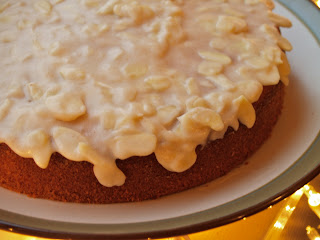
Citrus Almond Olive Oil Cake

Agree to bring the dessert to your next holiday gathering? Break out the olive oil! Your guests won't believe you baked a dessert without butter or canola.
Olive oil lends a surprising moistness to cakes, and this one comes out beautifully, without being too rich or overly sweet. But be sure to use extra virgin - don't believe those myths that say it's better to cook with 'pure' olive oil, which is just another refined oil. Stick to the good stuff. Always.
What you'll need:
1 cup all-purpose flour
1/2 cup almond flour (usually found in the natural foods section at your grocer)
1 1/2 teaspoon baking powder
1 teaspoon sea salt
3 eggs
3/4 cup granulated sugar (I like it a little less sweet and only use 1/2 cup)
1/2 cup of extra virgin olive oil
1/2 teaspoon pure vanilla extract
1/4 teaspoon pure almond extract
Grated zest of either 1 lemon, or half an orange - or mix 'em up!
1/2 cup fresh squeezed orange juice
Preheat the oven to 350 degrees and grease a round 9-inch cake pan. In a medium bowl, whisk together the all-purpose flour, almond flour, baking powder and sea salt and set aside. In a larger bowl, lightly whisk the eggs, then add the sugar and whisk for about 30 seconds. Next, add the olive oil to the egg mixture and whisk until slightly thickened. Last, whisk in the vanilla and almond extracts along with the orange juice. Add the flour mixture to the wet ingredients until you have a smooth batter, then pour into the greased pan and bake for 30 - 45 minutes. Test the cake by inserting a toothpick into the middle to see that it comes out clean.
After you pull the cake out of the oven, let it cool in the pan for about ten minutes and prepare the glaze in the meantime.
For the glaze you will need:
2 tablespoons butter
1/2 - 1 cup confectioner's sugar (depending on how much glaze you like on your cake)
3 tablespoons milk (I usually just add it until my desired thickness)
fresh lemon juice to taste (I like mine lemony and use about a teaspoon)
1/4 cup sliced, blanched almonds, toasted
First, toast the almonds on a baking sheet under the broiler until slightly browned. Set aside to cool. Next, melt the butter over medium heat in a small saucepan, swirly occasionally, until the butter turns a slight brown color and begins to smell a little nutty. While the butter cools, sift the confectioners sugar into a medium bowl, then whisk in the milk, and then slowly add the butter, whisking until combined. Next, add a few drops of fresh lemon juice to your desired taste, then stir in the toasted almonds. Carefully spread the glaze over the top of the cake with a spatula until it begins to drip slightly down the sides. Let the cake sit until the glaze is dry and then it's ready to serve.
Being that this is a slightly more dense cake, it can be served in smaller slices to a larger, hungry crowd. I also find that it freezes very well, and only takes a few short minutes at room temperature before it's ready to eat.
Labels:
cooking with olive oil,
desserts,
food for parties
Thursday, November 17, 2011
Hosting Thanksgiving?

Here is a marvelous article posted by the folks over at The Olive Oil Times for some tasty ways to add olive oil to your upcoming Thanksgiving meal: http://www.oliveoiltimes.com/olive-oil-basics/olive-oil-thanksgiving/8905
Labels:
cooking with olive oil,
entertaining,
Thanksgiving
Saturday, October 8, 2011
Reviewing Olive Oil (and other rants and praises)

Too often I find myself dining out in a lovely new restaurant, impressed by the ambiance, service, and look of the menu, while after ordering, the server carries over a basket of bread and pours some olive oil into a little white dish to whet the pallet. "UGH!- what is this?!" I exclaim to myself with the unfortunate taste of the first oil-soaked piece of bread I put in my mouth, "Really? They call this olive oil? Is this the best this restaurant can do?"
While my reaction may seem extreme, I feel that all too often restaurants try so hard in their kitchen, getting their menu and presentation just right, but make the unfortunate mistake of overlooking the important introduction to one's whole dining experience - the bread and olive oil. For whatever reason, be it cost, lack of knowledge, or lack of awareness of the customer's knowledge, chefs seem to not think much of placing a bottle of adulterated, and often rancid, olive oil out on the table for the customer's bread-dipping pleasure. As an avid olive oil connoisseur I take many issues with this. Often the chef decides that whatever 'olive oil' he's using for sauce making, frying, etc. in the kitchen is just as acceptable for the customers to eat raw and pour all over their food. I feel this is a huge disservice to the customer, not only in that it is an offense to the pallet, but that it is not allowing the customer the pleasure of experiencing what a true, fresh and robust, extra virgin olive oil can really taste like.
Restaurants are notorious for watching their costs to every penny and that is why the food service industry is one of the toughest markets to sell quality products. The extra virgin olive oil they think they're buying at a great price (a too-good-to-be-true price), is often not extra virgin or even 100% olive oil. They're often adulterated with refined oils such as canola or soy, or are of terribly low quality, old and rancid - and this is the stuff that ends up out on your table in that pretty little glass bottle. My advice to the restaurants is, fine, buy the cheap oil, but keep it in the back kitchen where it belongs, and do us all a favor and spend a few more pennies and buy a quality 100% extra virgin olive oil to put out on the tables. If you can't do that, then don't even bother putting any oil out on the table at all and go back to butter.
After too many disspointing olive oil experiences, and a few surprisingly great ones, I've decided I need to start spreading the word and have opened a Twitter account. My posts can be found here on my blog and on my Twitter page. Here I will tweet to my little heart's desire any time I want to express my opinion about what I'm seeing, tasting, and experiencing in the realm of olive oil. Feel free to jump on board and join the conversation: Follow @LoveforLathi
Labels:
bad olive oil,
restaurants,
reviews,
Twitter
Sunday, August 28, 2011
Fasolakia (green beans with potatoes and zucchini)
I know, summer is almost over and I'm just now offering you an idea for what to do with the bounty of green beans and zucchini many of you are growing in your gardens right now - or finding at your local farmers market.
Either served as a light meal or as a side, fasolakia is a traditional Greek vegetarian dish consisting of green beans, potatoes, and that fertile garden vegetable that you always seemed to have planted too much of - zucchini.
This is all you will need for this simple summer recipe to serve the family (it makes great leftovers too!):
2 lbs. fresh green beans (I've used frozen in the winter as well)
2 - 3 large juicy ripe tomatoes, grated
1 onion, chopped
1 cup Extra Virgin Olive Oil
2 medium-sized potatoes, peeled and cut into large cubes
2 - 3 Zucchini - I know these things range greatly in size, but you want to cut them into halved 3 inch pieces
salt/pepper
First, prepare the beans and wash them well, taking off the ends. If you're patient - which I not always am - you can remove the strings down the center of the bean as well, depending on how fresh or tough they are. Next, in a deep pot, heat the olive oil on medium heat and add the chopped onion, sautéing until tender. Now add the beans, grated tomato, and good amount of salt and pepper to taste along with 1 cup of water. Simmer over medium heat. After about 20 minutes, add the potatoes and zucchini and simmer for another 25 minutes, or until potatoes are tender.
The trick is to get the water content just right - you want to add only enough water as needed to cook all the veggies. They do release more water as they are cooked, so usually there is no need to add more. And as always, serve this dish with some fresh baked bread to soak up all that tasty sauce left on your plate!
Labels:
extra virgin olive oil,
fasolakia,
green beans,
summer food,
zucchini
Sunday, January 23, 2011
Hearty Lentil Soup

Who can't get enough homemade hot soup this winter? It has certainly become my staple for these long cold winter nights. Well, the days are getting longer now, right?
This lentil soup is a go-to favorite. With minimal ingredients and very little prep time, it's a great recipe to fall back on when the fridge and cupboards go bare. This soup is also very easy to add things to - as that's the beauty of soup. Have some veggies in the fridge that are on the verge of making their way to the garbage? Why not chop them up and throw them in the pot. But really, why change a good thing? You won't believe how good this soup is with nothing but the following ingredients:
2 cups of lentils (green or red, it's your choice)
1/2 cup Extra Virgin Olive Oil
2 large cloves of garlic, chopped
2 bay leaves
2 medium ripe tomatoes, grated
Salt, Pepper
(Crusty buttered bread optional)
If you know you're going to be having this soup for dinner, feel free to soak the lentils a couple hours ahead of time as it will speed-up the cooking process.
In a large pot, sauté the chopped garlic in the olive oil over medium heat for about one minute. Add the grated tomatoes and simmer for a couple more minutes. Add the lentils and about 4 cups of water. Stir in the bay leaves along with salt and pepper to taste. I like to add about 2 teaspoons of salt, as with all soups, salting is key. Simmer for about 30 minutes, perhaps a bit longer if you did not soak the lentils beforehand. Be sure to keep an eye on the soup, adding more water if necessary.
To top off the soup, I like to add some hard crusty bread at the end. When my favorite loaf of sourdough gets hard enough to break my teeth, I know it's good enough for my soup. Just lay it in your bowl with a little butter on top and let it soak up the broth.
Wednesday, November 10, 2010
Classic White Bean Soup
Ah yes, the mercury is dropping, perhaps you've broken out the hats and gloves, and for most of us, the sun has long disappeared by the time we return home from the office. We're slowly eating less fresh berries, salads, white wine and fish, and are now craving steak, baked potatoes, red wine and roasted lamb - or maybe that's just me. If there is one signal my stomach gives me that the cold weather has officially arrived, it is my sudden craving for the most classic of cold-weather food - soup!
Now I wasn't much of a fan of soup growing up. Whenever I would hear we were having soup for dinner, my aching, growling stomach would let out a small groan of disappointment with the anticipation of the bowl of hot water and vegetables that was about to hit it. It wasn't so much that the soup wasn't any good, it was more the lack of satiation I would feel eating bowl after bowl.
How I've changed my mind! I've since realized you can get so much more out of your soup! It's more than just boiled vegetables floating in hot water - it can be rich, creamy, full of complex flavors while remaining simple, and most importantly, it can fill you up as good as a steak and baked potato any day.
Nothing fits this bill more than a classic white bean soup. Rich in soluble fiber, iron and protein, white beans add such a richness to soup that you won't miss the meat. They also provide a real creaminess to the broth that one would be hard convinced no dairy was added. Nothing but minimal, simple ingredients in this soup, but it tastes like so much more!
What you will need (serves 2):
1 cup dry white beans (Navy or Great White Northern work fine)
1/3 cup Extra Virgin Olive Oil
2 large carrots
2 sticks of leafy celery
1 large ripe tomato, grated
1 tsp sea salt
1/2 tsp fresh pepper
Peeled skin (with the rind) of half an orange
Soak the dry beans overnight, or as long as you can before you plan to cook - the longer you soak them, the faster they'll cook. Bring the soaked beans to a boil and simmer for 5-10 minutes then drain and set aside. Pre-boiling the beans is key in that it helps take some of that pesky 'air' out of the beans, if you get my drift. Next, heat the olive oil in a large pot. Adding the carrots and celery, sauté for a couple minutes, then add the grated tomato and cook for about 5 minutes. Now add the beans, salt, pepper and orange peel - the secret ingredient, detrimental to the flavor of the soup - and it works best to just add it in one big piece. Last, add the water depending on how thick you like your soup. I usually add enough water to come up about 2 inches above the beans and keep an eye on it as it boils. Cover and simmer for about 40-50 minutes, until the beans are soft.
Tuesday, August 10, 2010
Choosing Your Olive Oil

One of the most common questions I receive from a someone curious about olive oil is, "How do I know how to choose a good olive oil?" In light of an article posted in the Huffington Post this week: Olive Oil 'Virginity' Questioned in California Lawsuit, I would like to give a little advice on what you should be looking for when you find yourself caught in bewilderment in the Olive Oil isle at your local supermarket.
First let's talk Italian oil. If the bottle says it's a product of Italy or that it is produced or packaged in Italy, it means just that - the oil was literally filled into the bottle in a factory in Italy. Now where that oil actually came from is another story. Because Italy is the top player in the Olive Oil market, meaning, most people recognize Italy as being known for producing olive oil above any other country, they are required to put out massive amounts of production, right? The problem is, Italy cannot possibly grow the amount of olives on their own soil to produce the amount of oil needed for export. So what do they do? They buy oil from Spain, Tunisia, Morocco and other surrounding countries that can offer them a large quantity of bulk oil for a good price, and unfortunately, that often means lower quality. So that fine bottle of Italian oil you have sitting in your kitchen? Yes, it's a pretty good bet it's actually a cheap oil from Spain.
Another good indicator of a high quality oil is the price. Again referring mostly to Italy, if the price is too good to be true, it probably is. Now, that's not to say there aren't some great reasonably priced oils out there, you just have to know what you're looking for. I'm sorry to be picking on the Italians so much, as they do produce some of the most astounding oils in the world, unfortunately you just have to pay for it.
For a more affordable high-quality Extra Virgin Olive Oil, look to Greece. Yes I know, I do love Greece, that is true, but because the Greeks dedicate 60% of their cultivated land to growing olives, they actually produce most of their own oil, and because Italians have been savvy for years in selling delicious food products, the Greeks tended to just sell their good oil to the Italians only to be labeled as 'Product of Italy'. Well now the Greeks are trying to get into the market themselves and show-off their local golden nectar. So next time you find yourself looking at a Greek oil in the supermarket, chances are, it is actually a real Greek oil. This could be true for many other countries that don't have the massive production demands that Italy has. So all I'm saying is, watch out for those Italian oils.
Another way to know that the oil in your bottle is produced where it says, is by looking for the PDO certification on the label. This stands for Protected Designation of Origin which is a European certification that the oil in the bottle does in fact come from the specific region it states. Other versions of this certification are PDI or Protected Geographical Indication, DOP or Denominazione di Origine Protetta and AOC or Appellation d'Origine Contrôlée. These certifications are becoming more common on products exported to the USA so you should keep an eye out for them.
Great news is that in October the US Department of Agriculture will be implementing new standards for labeling olive oils more comprable to the International Olive Oil Council, which has been setting the standards for olive oil in Europe for years. Hopefully this will make it a little easier on us all next time we're faced with that great wall of olive oil at the local grocery.
Monday, July 19, 2010
Cretan Dakos

Rusks, hard dry breads made from barley and whole wheat, have been an essential part of the Cretan diet for many years. Lauded for its high fiber content, the locals praise its digestive qualities and have perfected the art of baking these delicious breads. If you are lucky and have access to a store that sells these rusks, as many specialty Mediterranean food stores do, be sure to look for ones with a high barley content as the whole wheat rusks are less hard and will become soggy quite quickly. Look for the brand 'To Mavva' (pronounced 'Toe Mahnah') with the green labeling (the blue labeled ones are whole wheat) as I considered these to be the best barley rusks from Crete.What you will need:
Barley Rusks*
Sea Salt
Extra Virgin Olive Oil
Grated Ripe Tomatoes
Goat Cheese (Feta, Myzithra, or Soft Goat Cheese)
Oregano
Kalamata Olives
Depending on the size of the rusks, use as many as your hunger requires. Take the barley rusks and run them under tap water until the whole rusk is wet (a few seconds will do). Do not skip this step - they are VERY hard and will break your teeth if you don't! However, if you are using a whole wheat rusk, or bread you have dried out on your own at home, skip this step to avoid ending up with a plate of mush. Once the bread is wet, generously sprinkle the bread on all sides with sea salt, place on a serving dish, then pour your finest, freshest Extra Virgin Olive Oil over the bread. If you have a Greek Koroneiki variety, use it! The flavor of the oil really shines in this dish.
Next, grate the tomato (one medium-sized ripe tomato per piece of bread) and pour on top of the bread, then take the goat cheese and crumble as much as you like on top. Take a pinch of dried oregano and sprinkle over the cheese and place a few kalamata olives on top. Now take your bottle of olive oil once again and drizzle some more over the entire dish for a final touch. Serve right away.
The outcome should be bread that is not too hard nor too soggy - think 'softly crunchy'. By the time you serve the dish, the combined flavors of the oil and tomato should have soaked into the bread and be absolutely delicious!
* If you cannot find barley rusks, wheat rusks are ok too, just do not wet them with water before you cover with the oil and tomato. You can also dry out thick pieces of whole wheat bread at home in your oven on low heat.
Labels:
dako,
dry bread,
extra virgin olive oil,
grated tomato sauce,
greek food
Saturday, July 10, 2010
Shrimp Pasta (it's all about the sauce!)

Ever wondered how a gourmet Italian restaurant creates that perfectly light tomato sauce that you can never seem to recreate at home? Well I did, and the secret is as simple as having a quality bottle of Extra Virgin Olive Oil and a juicy ripe tomato. Never buy that thick, sugary, canned pasta sauce again! Impress your friends with your own home made sauce - and they never have to know how effortless it really is!
Here is what you'll need for a meal for two:
Pasta noodles - I prefer a long noodle like Spaghetti or Fettucini
Extra Virgin Olive Oil
1 medium-sized clove of garlic, chopped
Fresh or frozen, cooked or uncooked shrimp - as many as your heart delights
2-3 Tbsp white wine
1 large ripe tomato
Pinch of sugar
Salt
Fresh cracked pepper
Parmesan cheese
First, get your water boiling for the pasta. Cook the noodles 1 minute less than al-dente according to the directions on the package. I find you can cook the sauce in the amount of time it takes to boil the water and cook the noodles, so get them going first. In the meantime, work on your sauce.
Heat enough olive oil on medium heat to coat the bottom of your skillet (you'll want to use a skillet that's large enough to hold all the pasta when it's ready). Add the chopped garlic and let sizzle for a minute, careful not to let it brown. Next, add the shrimp. Sauté until pink if uncooked, or if cooked, sauté until warmed, then add the white wine and turn up the heat just a tad to a slight boil. While the shrimp is cooking in the wine, grate your tomato and stir in with the shrimp. Sprinkle a pinch of sugar then add as much salt and pepper to your liking and continue to let the sauce thicken until noodles are ready.
Once the noodles are cooked, drain and add them to the skillet to stir in with the sauce. The idea is to let the noodles cook in the sauce for another minute or two so they soak up all that tastiness, but be careful not to overcook - you still want them al-dente, unless of course you prefer your noodles soggy.
When the pasta is all ready, the final touches are up to you. You can add some grated parmesan cheese and more fresh cracked pepper, and if you're a true olive oil lover, lightly drizzle your finest over the top just before serving.
On a side note, sliced Kalamata olives, artichoke hearts and crumbled feta cheese (in which case you would omit the parmesan) added to your sauce just before stirring in the cooked noodles, make a great hearty addition.
Wednesday, July 7, 2010
Cucumber Water

Now I know this has absolutely nothing to do with olive oil, but it does have to do with my second favorite natural consumable liquid: Water! Being that summer is now in full-force, I just wanted to share what I have been drinking by the gallon to keep hydrated. Just slice up a small cucumber, drop the slices into your favorite pitcher, and fill it up with some cool filtered water. I sometimes even add a sprig of fresh basil as the two flavors complement each other well. I find drinking cucumber water to be extra refreshing than plain 'ol water after a long afternoon in the sun. The best thing is that you can continually refill the pitcher with cool water using the same cucumbers and toss them out at the end of the day.
More olive oil recipes coming very soon!
Thursday, May 13, 2010
Greek Boureki

With summer just around the corner comes an abundance of fresh zucchini from the garden. So instead of sending your kids stumbling down the street, arms overflowing with your garden's bounty to give away to the neighbors (sorry, childhood memory...), here is one baked dish that you won't mind eating once a week and as always, is simple to prepare and a pleasure to devour!
What you'll need:
3 medium potatoes
3 small zucchini
1/4 cup fresh mint, chopped
1/2 teaspoon dried oregano
1 large ripe tomato, grated (see former blog regarding tomato grating)
1/3 cup Extra Virgin Olive Oil
1/2 cup water
salt & pepper
1 package plain goat cheese (6 oz.)
Begin by peeling the potatoes and slicing them into rounds about 1/8 inch thick and sprinkle with sea salt to let rest a couple minutes. Slice the zucchini in the same manner and thickness. Place sliced potatoes and zucchini in a large bowl, then add the chopped mint, grated tomato, olive oil, water, and a bit more salt and pepper to taste. Combine the ingredients with your hands - it's the best way to mix! Pour mixture into a 9x13 baking dish and crumble the goat cheese over the top. Place in the oven and bake uncovered at 425° for 50 minutes or until the cheese begins to turn a golden brown.
Wednesday, March 31, 2010
Tuna Salad Deluxe

Having been raised in the Midwestern United States, canned tuna was pretty much a staple growing up, from tuna melts to tuna hotdish, while my favorite being the tuna salad sandwich - a can of tuna, a little mayo, and a spoon full of dill relish stuffed between two slices of bread. Classic. Over the years my love for canned tuna has never waned, and to this day I enjoy experimenting with the multiple ways this delicious can of fish can be used in the kitchen.
If anyone asks what simple culinary delight I gravitate towards most while enjoying a quiet night alone at home, it would be the tuna salad. For some reason it just never gets old. Over the years of trying out different variations, mainly sweet vs. savory, I've discovered what I now call my 'Classic Tuna Salad', the one I prepare literally twice a week. It's by far my best savory salad, with a little bit of a kick and can also makes a great melt.
Fish loves olive oil, olive oil loves fish and the more the better! When making a proper tuna salad I always mix some directly in with the tuna mixture for moisture, thus needing less mayo, then pour more over the entire salad when finished. Oh, and did you know they make mayonnaise with olive oil now? Good stuff. Keep an eye out for it next time you need to restock the mayo.
For the tuna mixture:
1 can tuna in water
1 tsp. mustard powder (this provides the kick)
1 tbsp. mayo
1/2 tbsp. olive oil
squeeze of fresh lemon
dash of salt and cracked pepper
Mix the ingredients above in a bowl so all the flavors blend with the tuna, then add the follwing:
2 chopped dill pickles or one heaping spoonful of dill relish
4 finely chopped almond-stuffed green olives (or add slivered almonds)
1/3 cup chopped fennel (don't leave this out, it really is the secret of the salad!)
After all of the above ingredients are mixed together, scoop it out over your favorite veggies - I prefer mine Greek-style with fresh tomatoes, cucumbers and sliced green or red pepper, sprinkled with a little sea salt. Then pour your Extra Virgin Olive Oil over the entire salad, drizzle a little white wine vinegar, and (for those of you who live in Crete) throw in a couple of small barley rusks.
Thursday, March 18, 2010
Letting go of your fear of fat...

As you may have realized by now, I am a huge advocate of eradicating the old notion that fat makes you fat. I know it seems so logical, where immediately upon ingesting the stuff that it would quickly attach itself to your most glorious bodily regions. Well, I am here to dispel the myth and consider myself living proof of the fact. I eat fat with the fullest of pleasure - no lean meats for me! Don't take that skin off my chicken! Pork belly? Bring it on! What do you mean 'drizzle' a teaspoon of olive oil on my salad? Give me the bottle!
Let's face it, fat has suffered a bum rap over the years. What we have forgotten however, is that is in fact a nutrient, one that keeps your hair shiny, your skin soft, and your belly full - saving you from those multiple trips to the kitchen. Now I'm not advocating all fats are great, but I do feel that the industrialization and manipulation of our foods over the years has caused us great damage. I truly believe that fats from natural sources - meats, fish, dairy and fruit oils (olive oil!) - are not as scary as we have been lead to believe, and that certainly not all fats are created equal. As I've said before, I don't know where that liter of olive oil goes that I consume in a week, but it doesn't appear to be going to my thighs.
As I was searching around online to see if anyone else shared my views, I happened upon a wonderful fat-advocating article from the Weston A. Price Foundation, a non-profit organization who believes in "restoring nutrient-dense foods to the American diet through education, research and activism." The foundation strives to continue the research of Weston A. Price, a nutritional researcher who supported the scientific validation of traditional diets by studying the foods and health of isolated non-industrialized peoples around the world. I highly recommend clicking here to read "Taking the Fear Out of Eating Fat" - their quest to restore some dignity to our friendly nutrient.
*photo courtesy of "The Onion"
Labels:
extra virgin olive oil,
fat,
fat free,
fear of fat,
myth,
olive oil
Monday, March 15, 2010
Eggplant Parmesan
I'm really not sure what to call this, as it really is just a medley of vegetables - eggplant, zucchini, and potatoes with Parmesan cheese. I enjoy this dish year-round and especially when eggplant is in season - I love the little 'Spanish/European' eggplants that are similar in size to the zucchini and try to buy them when I can. I also find this dish to be a more satisfying vegetarian meal and as always, quite simple to prepare.
First I'd like to reiterate how I determine my portions for ingredients. When I am in my kitchen at home I generally aim to cook a generous meal for 2 people as I like having a little bit of leftovers. I do find however, that most of these recipes can be easily modified and that it's not necessary to follow the portions with precision. I'm one of those people to tends to eyeball things - rarely measuring or timing anything, unless it comes to baking of course, so I encourage you to freestyle with your portions as well.
What you'll need:
3 zucchini
3 Spanish/European eggplant (or one regular eggplant)
3 medium potatoes
1 large ripe tomato
Whole Parmesan Cheese
Extra Virgin Olive Oil
Salt, Pepper
Heat about 1/4 cup of olive oil in a deep pot on the stove. Quarter the potatoes and add to the olive oil. Quarter the zucchini and eggplant and add to the pot. You want to be sure that all the veggies are in larger pieces so they do not fall apart when cooking. Grate the tomato (as seen in previous blog) and add to the pot along with the salt and pepper to your taste. I like to salt my veggies after they are cut and let them sit for a minute allowing the salt to soak in.
When you have everything in the pot, add a good cup of water and cover. When it comes to a boil, turn it down to simmer until potatoes are cooked - about 25 to 30 minutes depending on what type of potato you're using. Do check on it once or twice while it's simmering to see if you need to add a little more water. The trick with this dish is getting the liquid just right since the zucchini and eggplant will release more water as they cook, so just keep it in mind.
After the veggies are cooked, cut up some Parmesan cheese into 1 inch cubes and add them to the pot. You want the cheese to be melted just slightly, but remain intact.
It's now ready to serve - be sure to have some bread on the table to soak up all the extra sauce on your plate!
Tuesday, March 9, 2010
Olive Oil Myths
This is a link to a blog written by Australian olive oil taster and blender, Richard Gawel titled "The All-Time Top 10 Myths Surrounding Extra Virgin Olive Oil". It addresses many of the common misconceptions associated with olive oil from first cold pressing, to its low smoking point, to storing your oil in the refrigerator: http://www.aromadictionary.com/EVOO_blog/?p=263
Subscribe to:
Posts (Atom)